01
Malaysian election predictions
Sean Ng
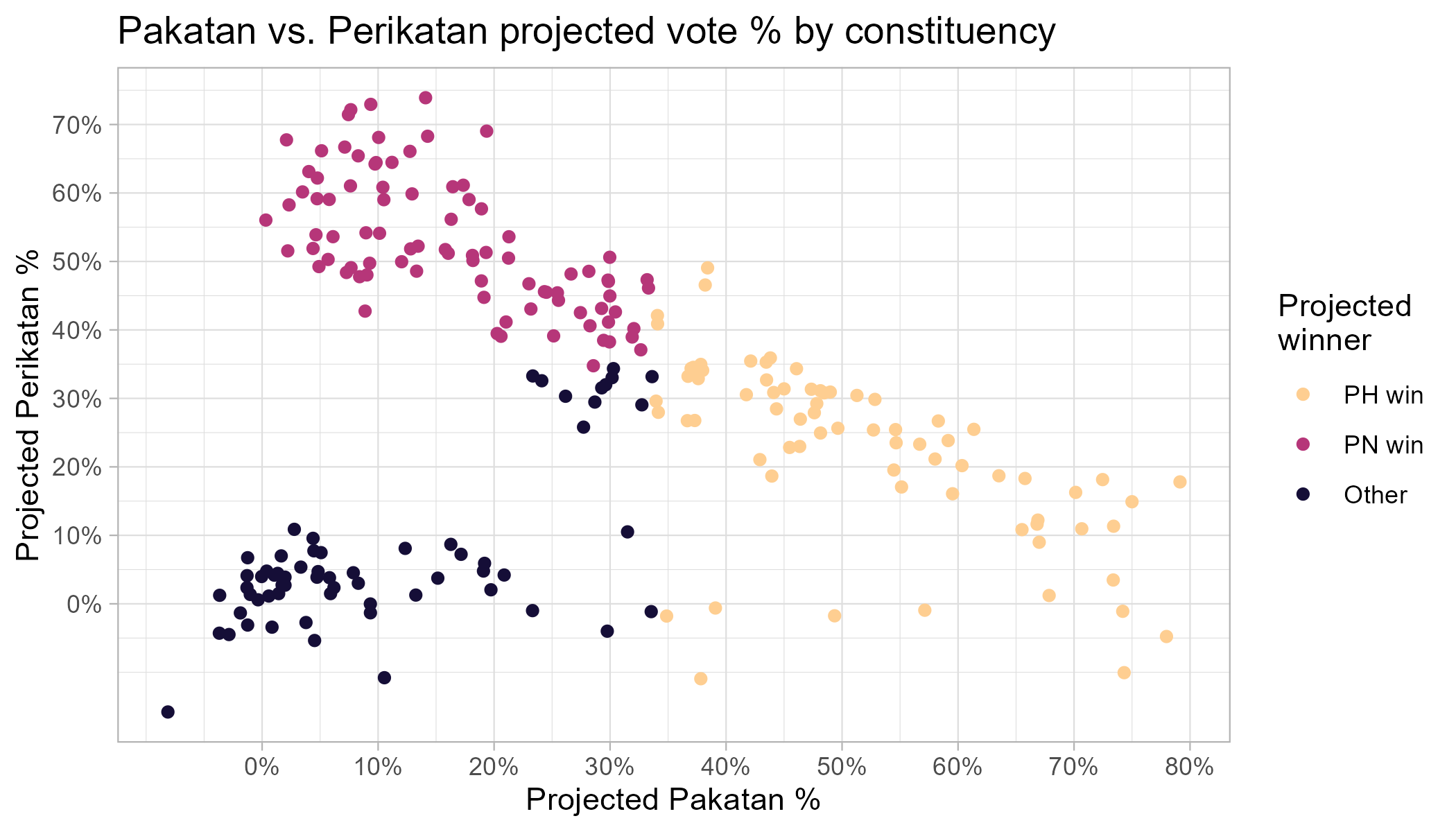
Perikatan Nasional are anticipated to win 95 seats, whilst Pakatan Harapan are anticipated to only win 72 seats. As a small consolation to PH, there is projected to only be a very small difference between PH’s and PN’s shares of the national vote. But to have a chance at being the largest coalition, Pakatan must win all of Selangor and extend its reach in Johor and Pahang – an unlikely prospect.
02
linkedin job postings
Sean Ng
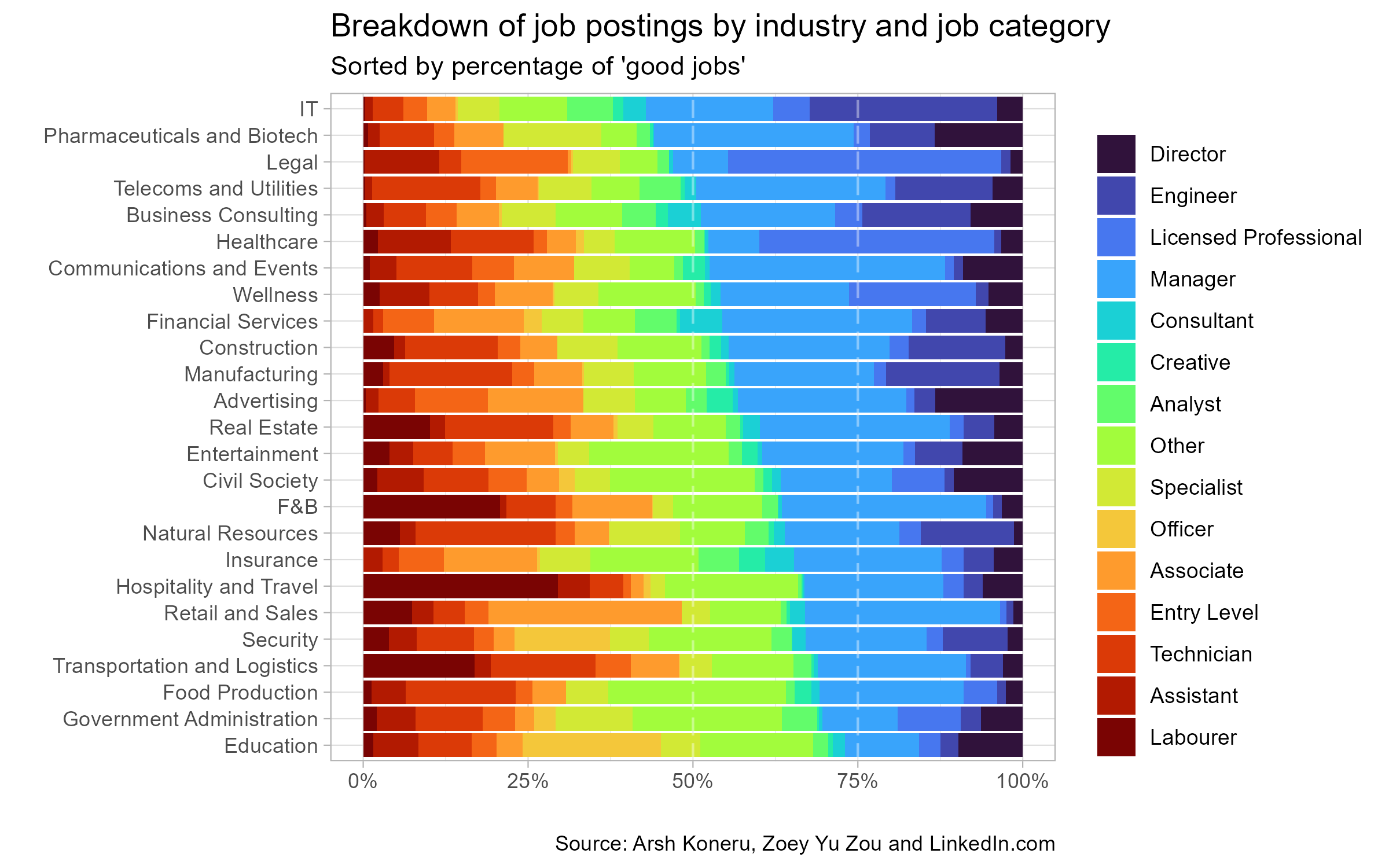
Looking at the five largest industries by number of job postings, we can confirm several things that we already likely know from cultural osmosis: IT is a large and well-compensated industry. Healthcare and Manufacturing, whilst having many new jobs, have middling salaries, on average. There are a large number of poorly-compensated retail jobs.
03
Google and trip advisor reviews in Kl
Sean Ng
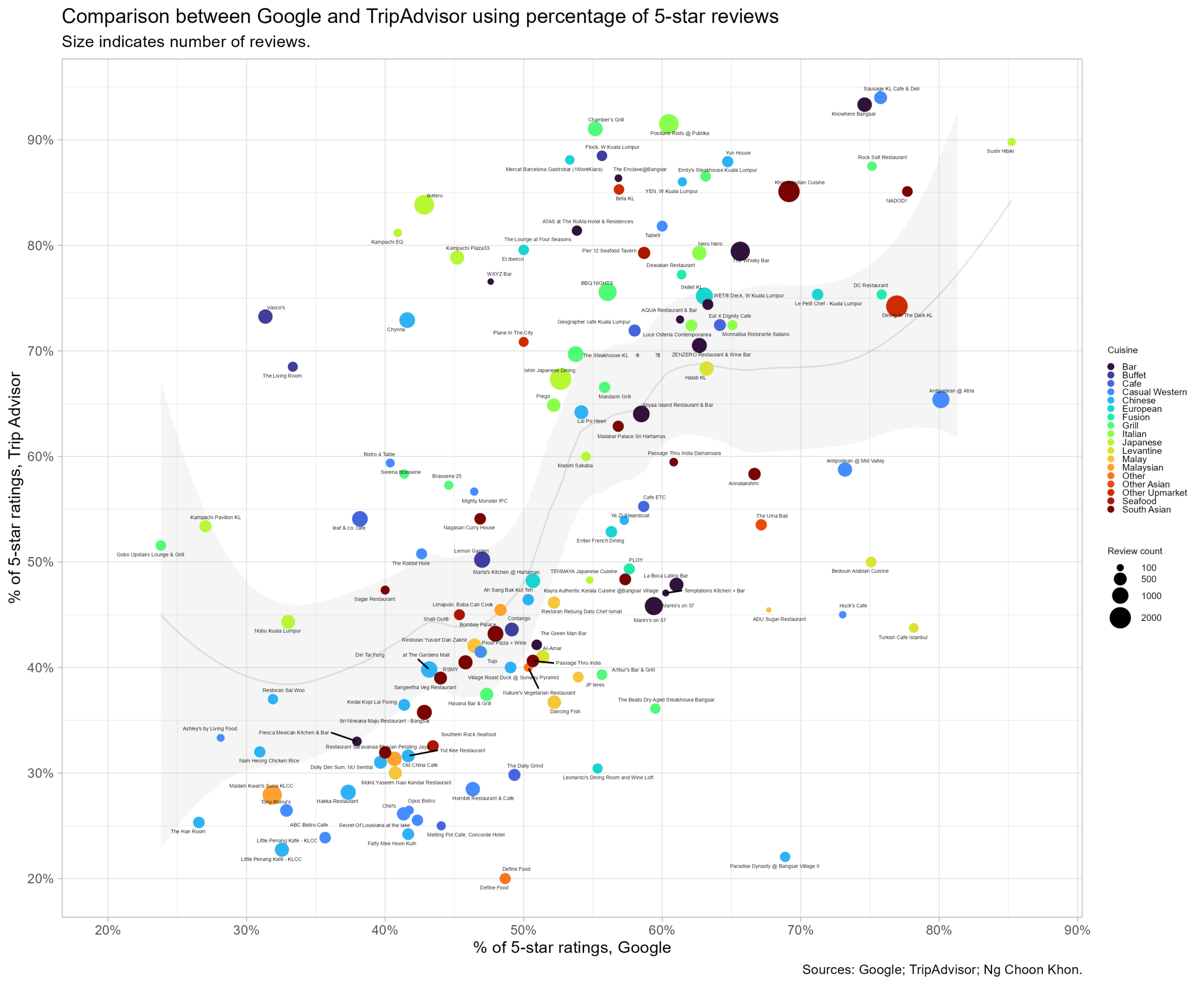
A common refrain for this postmodern age is that online reviews are useless.
Today, we’re looking at two different sets of scraped restaurant reviews to determine to what extent that is true. Restaurant reviews from Google and Trip Advisor in Malaysia were scraped by Ng Choon Khon using the Selenium library.
04
Asia-pacific conflict trends
sean ng
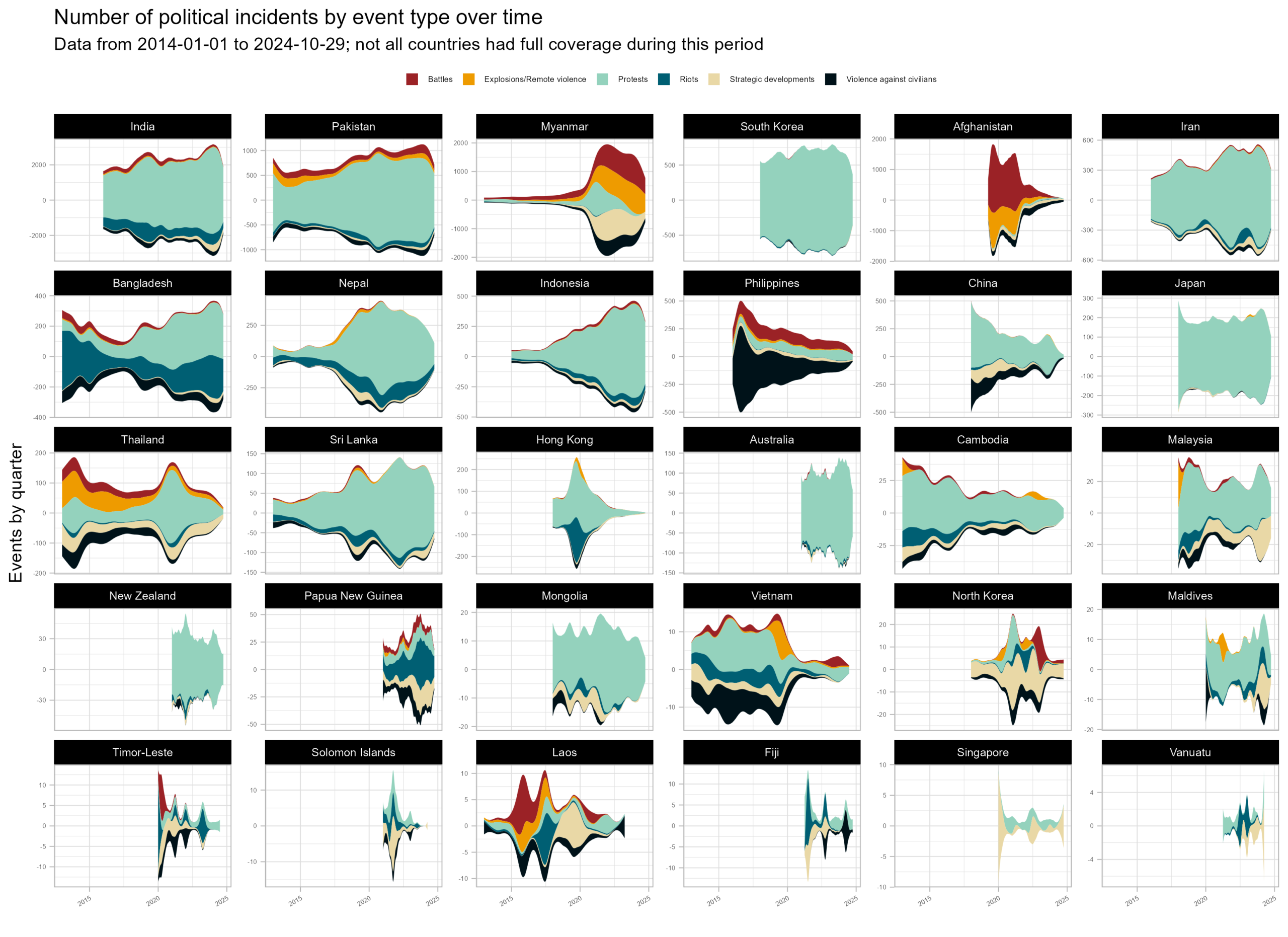
Whilst the immensity and diversity of the Asia-Pacific demand exceptions to every rule, we can identify a central tendency (the solid blue line) that most countries in the region seem to sit on. On one end of the line are disproportionately quiet autocracies (or their approximations) and on the other are countries where violence has spun out of state control.
Myanmar and Afghanistan have separated themselves from this central curve as a consequence of open warfare. Philippines, Papua New Guinea and Pakistan are all at risk or were at risk of doing the same in the past 10 years.
05
LEBANON conflict trends
sean ng
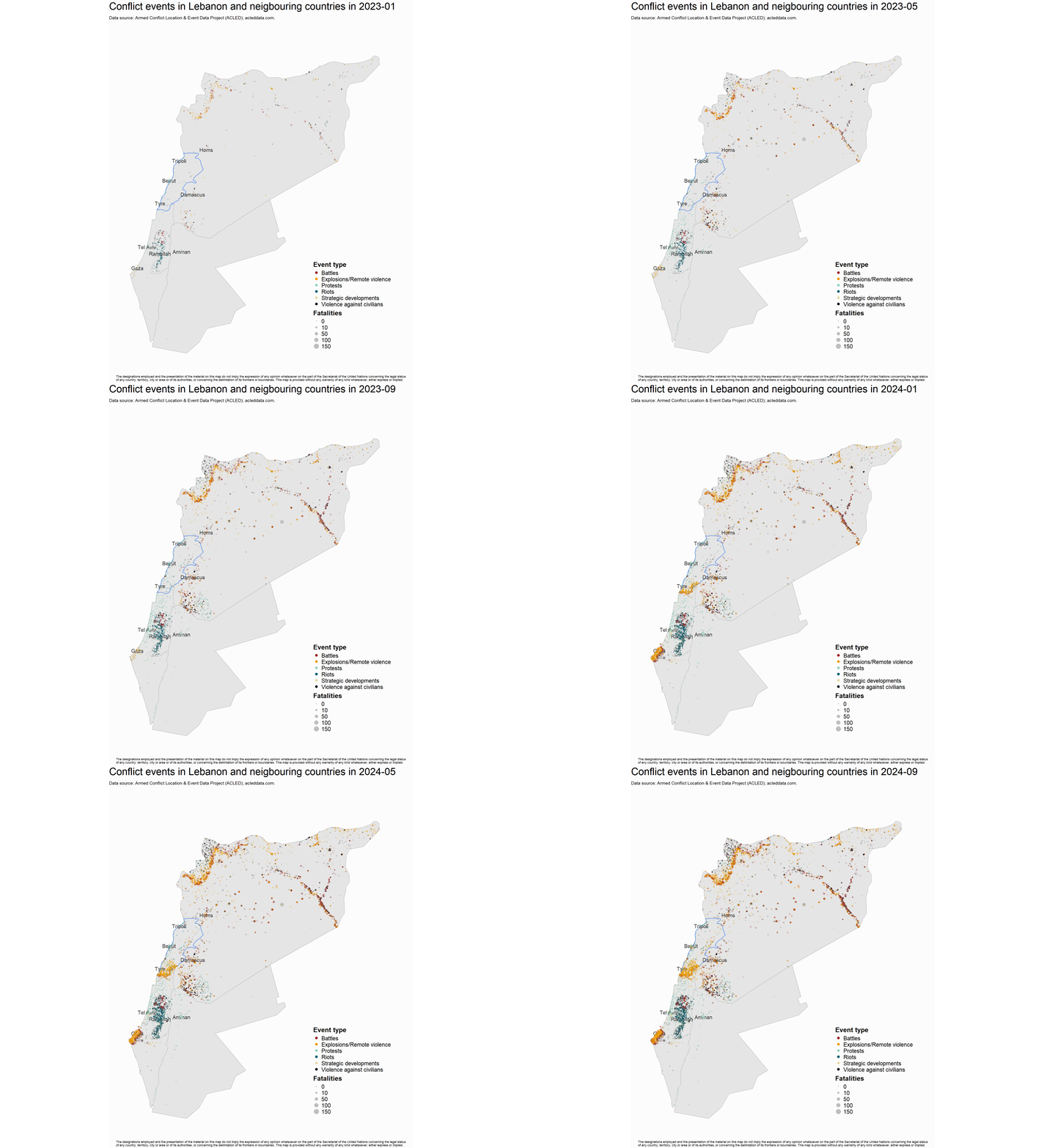
The gif shows a month-by-month progression of political conflict and violence in Lebanon, Israel, Palestine, Jordan and Syria from January 2023 to the present day. For at least the past two years, Lebanon seems far more influenced by the conflict in Palestine and Israel than the conflict in Syria – there is hardly any cross-border violence and Lebanon largely borders Assad-held areas, though there are many Syrian conflict actors operating within Lebanon. Social cohesion between Syrian refugees and host communities has been deteriorating at a rapid pace in Lebanon.
However, the southern border of Lebanon with Israel has become a conflict hotspot, in the aftermath of the October 7 2023 Hamas attack on Israel. The last frame of the gif does show events related to the 2024 Lebanon pager explosions, but it is also clear that this incident – whilst certainly deadly and newsworthy – is part of a much broader escalation of conflict.
06
Myanmar township prioritisation
sean ng
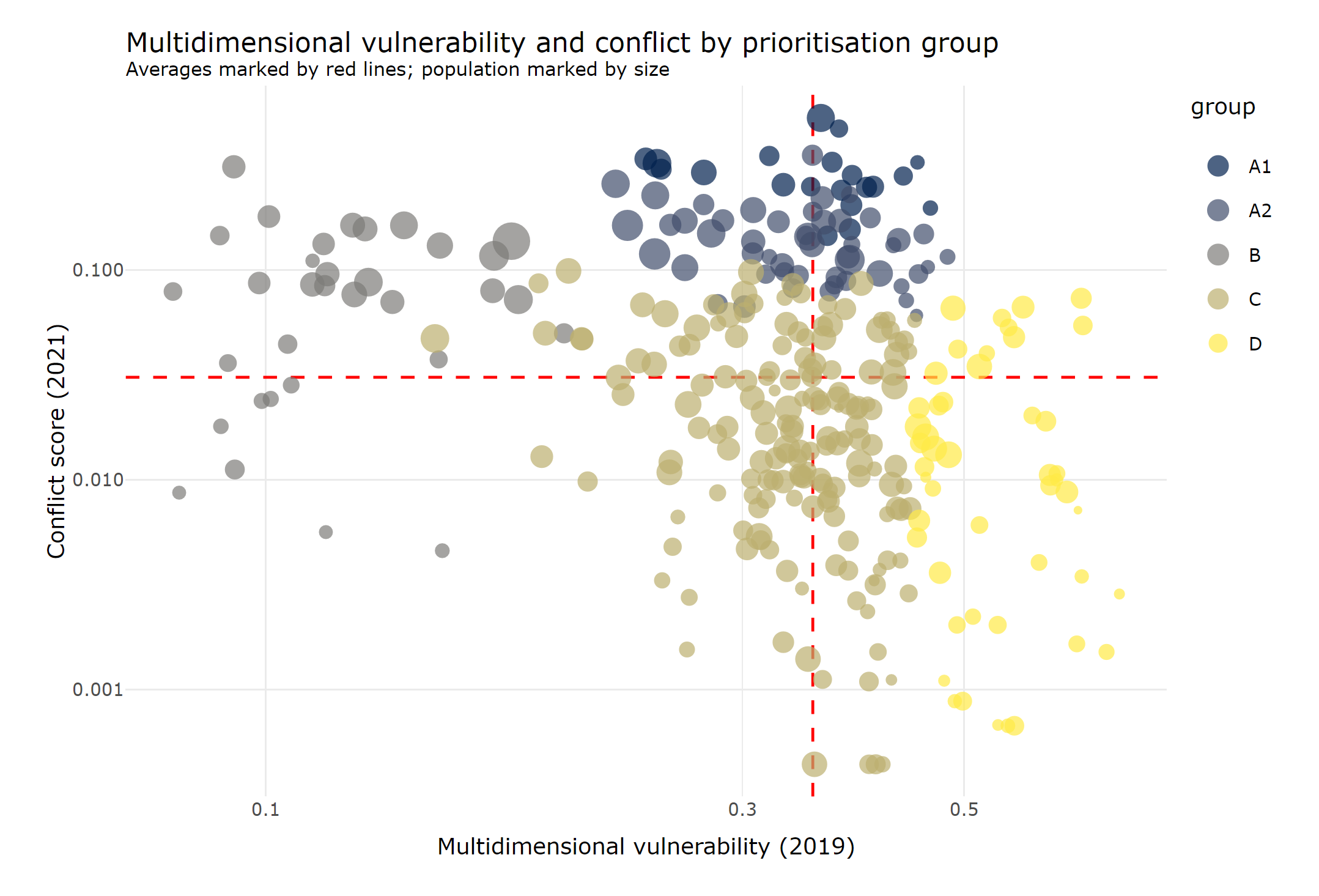
In recognition of the different contexts present in Myanmar (and the consequent need for different programming options), a simple K-means clustering was conducted on the townships to split them into prioritisation groups based on their 2021 conflict score, their 2019 vulnerability score and their population density. This clustering separates all 330 townships into five groups. The plots below show the spread of townships by prioritisation group across the 2021 conflict score, 2019 vulnerability score and population density.
07
understanding conflict dynamics in Myanmar
sean ng
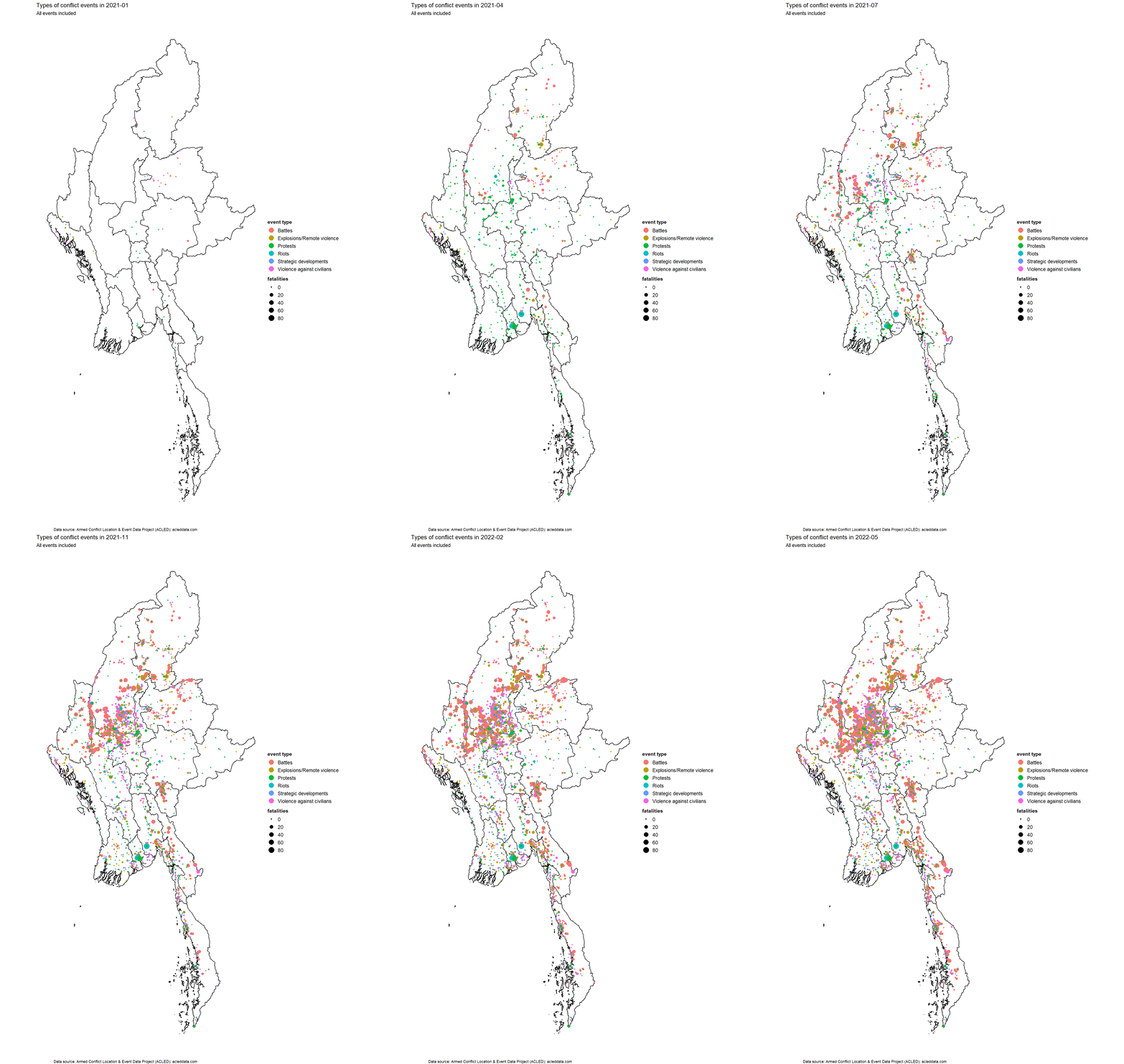
In 2021, Myanmar experienced more conflict events than any other country. Despite existing in a state of civil war for the past 70 years, conflict in Myanmar had remained at a relatively low level when compared with the other high conflict countries, such as Syria, Yemen and Afghanistan.
However, following the military takeover on 1 February 2021, conflict in Myanmar quickly increased, and by the end of the year it had overtaken Syria as the most conflict-affected country. The following report uses data from the Armed Conflict Location and Event Data Project, or ACLED, to analyse and provide an overview of the conflict situation in Myanmar and what that means for food security into the future.
08
coverage and gap analysis of Venezuela
sean ng
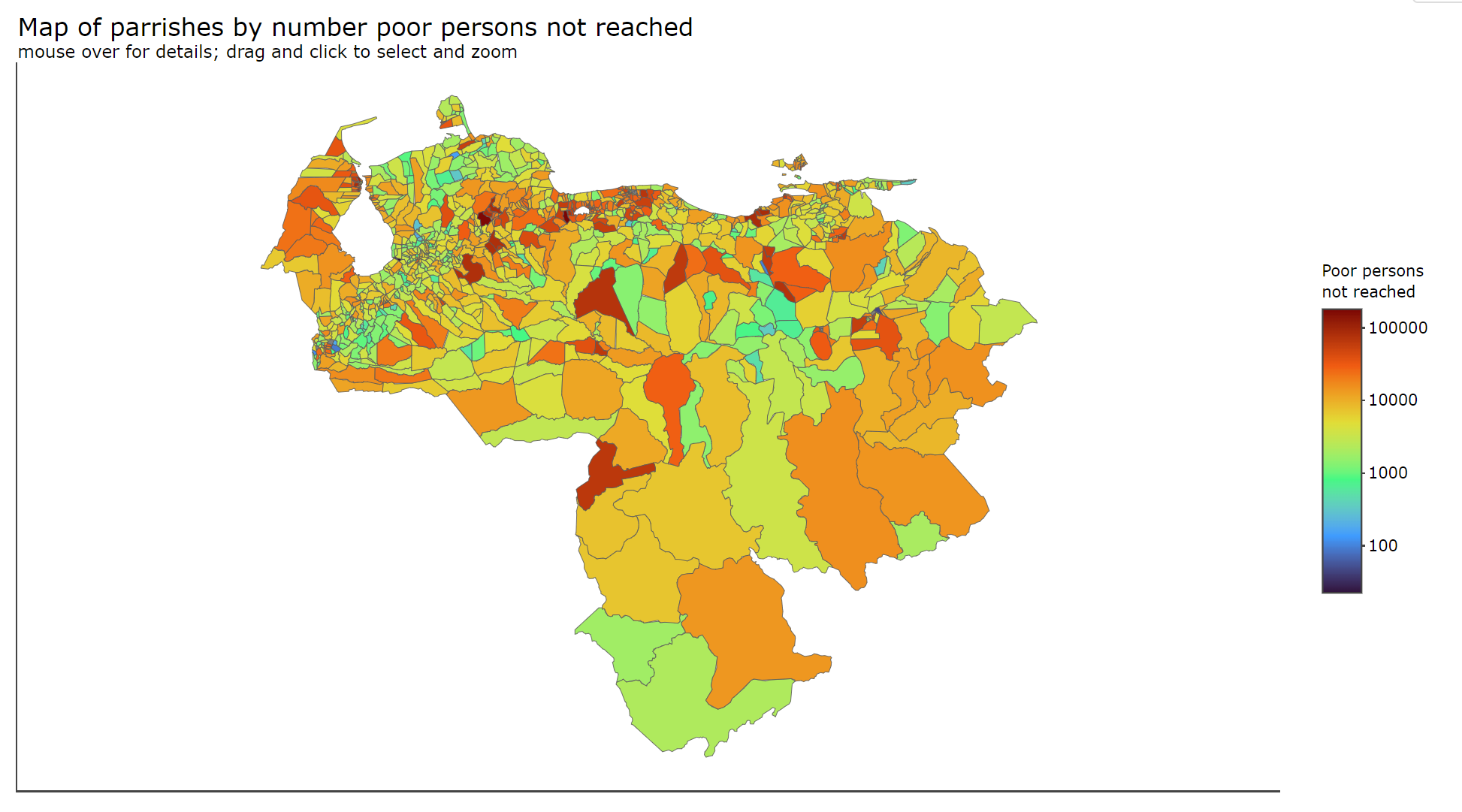
Humanitarian needs always grossly outweigh available funding; however, it remains an industry-wide challenge to respond adequately to gaps in coverage and reallocate resources accordingly. Too often, once committed to a course of action, clusters and their humanitarian partners do not re-examine or re-evaluate their interventions. This results in responses with glaring gaps that are either not resolved in a timely manner or go completely unaddressed.
09
a new index of refugee protection
sean ng
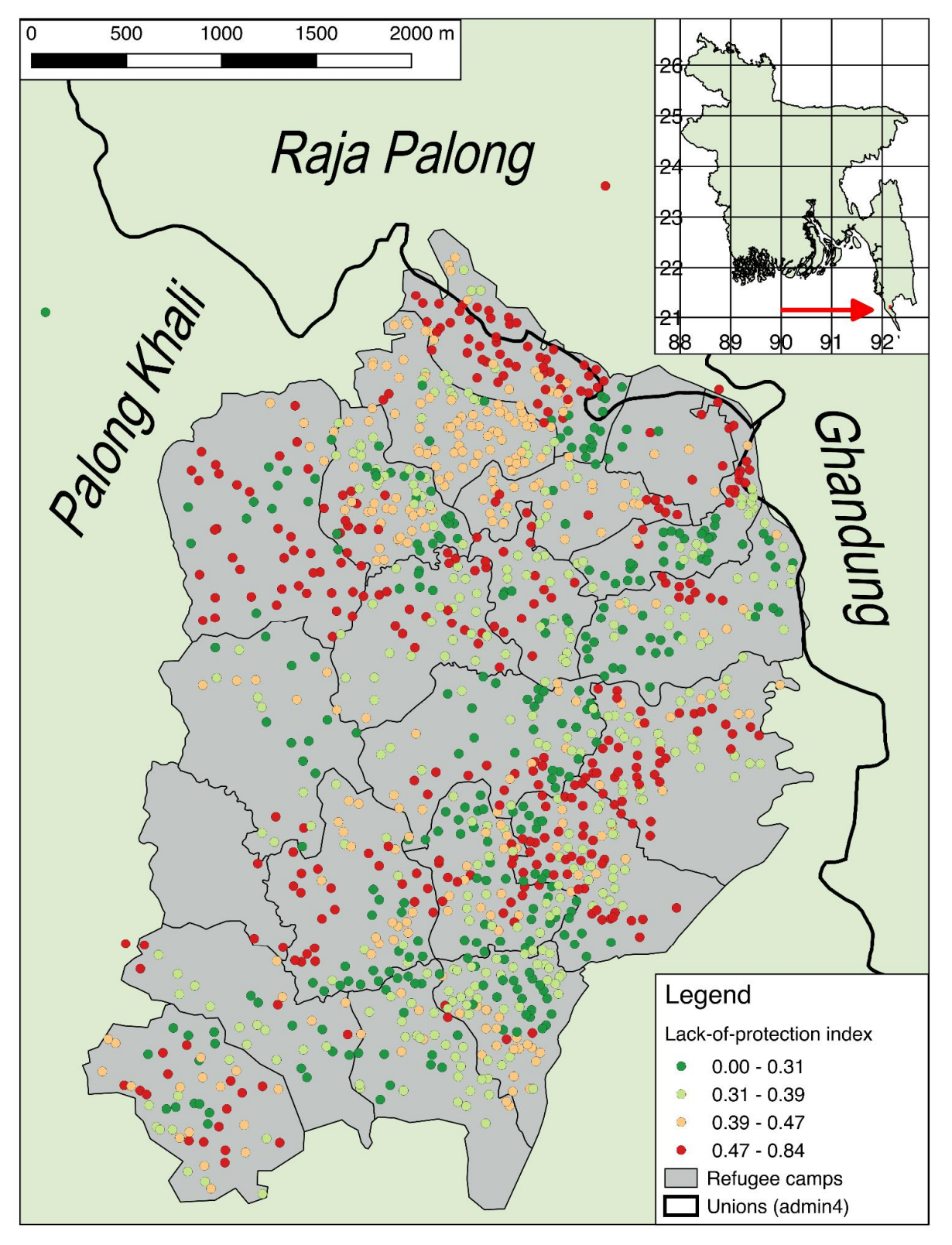
The purpose of this note is to conduct a methodological experiment in constructing a
quantitative measure of refugee protection. The measure can be used to highlight different degrees of protection challenges between geographical areas or groups of refugees. We use a statistical method borrowed from poverty research that circumvents apples-and-oranges conundrums in weighting indicators. It casts a wide net in order to capture as many aspects of protection as the indicators cover while at the same time minimizing redundancy among them. The indicators in the NPM dataset are negatively oriented; therefore, we interpret the index as one of “Lack of protection”.
10
vulnerability in myanmar
sean ng
Myanmar’s progress on the global 2030 Agenda for Sustainable Development and the Sustainable
Development Goals will largely depend on the country’s approach to targeting the poorest and most
marginalised people, adhering to the core principle of leaving no-one behind in the country’s development.
This requires an understanding of pre-existing vulnerability and specifically who is affected, where and how.
Vulnerability has no single defining trait; it exists across a diverse range of facets and characteristics,
with individuals and groups potentially affected by different vulnerabilities, at different times. There has been little analysis of vulnerability in Myanmar – what does exist is generally at the state/region level, masking differences within and between townships, village tracts and population groups. More detailed analysis is needed to understand variations in vulnerability countrywide, and at lower administrative levels than states and regions.